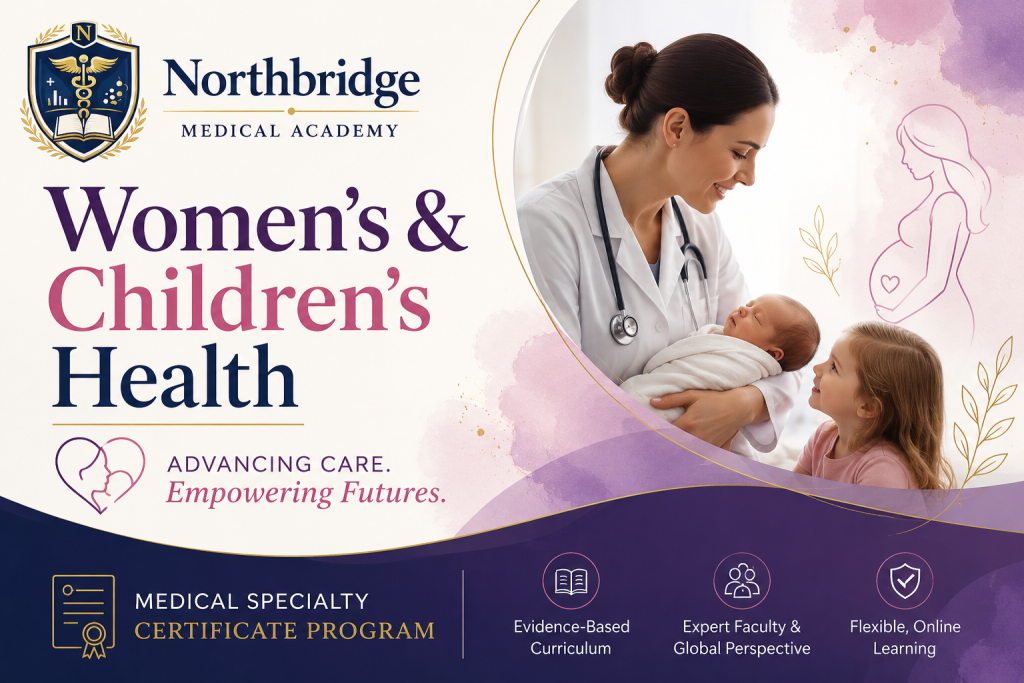
Women’s & Children’s Health – Master Specialization Certificate
Program Introduction
Start Anytime – Study at Your Own Pace
The Women’s & Children’s Health Master Specialization Certificate Program is designed for physicians, nurses, midwives, pediatric healthcare professionals, obstetric practitioners, public health specialists, educators, researchers, and individuals seeking advanced knowledge in maternal, neonatal, pediatric, and adolescent health. This flexible, self-paced program allows participants to begin their studies at any time and complete the program according to their own schedule.
Upon successful completion of the program requirements, participants will receive a Master Specialization Certificate in Women’s & Children’s Health. Digital certificates are typically issued within one week of successful program completion.
Program Overview
Women’s & Children’s Health is a multidisciplinary field focused on promoting health and well-being across the lifespan of women, infants, children, and adolescents. The specialty integrates preventive medicine, reproductive health, maternal care, neonatal medicine, pediatric healthcare, nutrition, mental health, and public health interventions to improve outcomes for families and communities.
This program provides a comprehensive understanding of maternal health, reproductive medicine, neonatal care, child development, pediatric diseases, adolescent health, preventive healthcare strategies, nutrition, family-centered care, and emerging developments in women’s and children’s healthcare.
Learning Outcomes
Upon successful completion of this program, participants will be able to:
- Understand the foundations of women’s and children’s health.
- Explain reproductive, maternal, neonatal, and pediatric health principles.
- Analyze factors affecting maternal and child health outcomes.
- Understand preventive healthcare approaches across the lifespan.
- Evaluate common women’s and pediatric health conditions.
- Apply evidence-based approaches to maternal and child healthcare.
- Promote health education and disease prevention strategies.
- Understand developmental, nutritional, and psychosocial aspects of care.
- Support family-centered and community-based healthcare interventions.
- Evaluate emerging trends in women’s and children’s health.
Curriculum
Module 1: Introduction to Women’s & Children’s Health
- Foundations of maternal and child health
- Global health perspectives
- Healthcare systems and services
- Population health approaches
Module 2: Reproductive Health and Women’s Wellness
- Reproductive anatomy and physiology
- Family planning
- Reproductive health promotion
- Preventive women’s healthcare
Module 3: Maternal Health and Pregnancy Care
- Antenatal care
- Maternal risk assessment
- Pregnancy complications
- Maternal health promotion
Module 4: Childbirth and Postpartum Care
- Labor and delivery principles
- Postpartum recovery
- Maternal mental health
- Breastfeeding support
Module 5: Neonatal Care and Early Life Health
- Newborn assessment
- Neonatal adaptation
- Prematurity
- Neonatal healthcare interventions
Module 6: Growth and Development Across Childhood
- Physical development
- Cognitive development
- Emotional development
- Developmental milestones
Module 7: Pediatric Health and Common Childhood Conditions
- Infectious diseases
- Respiratory disorders
- Gastrointestinal disorders
- Pediatric chronic conditions
Module 8: Child Nutrition and Preventive Health
- Infant nutrition
- Childhood nutrition
- Growth monitoring
- Immunization programs
Module 9: Adolescent Health
- Pubertal development
- Mental health considerations
- Reproductive health education
- Risk behavior prevention
Module 10: Women’s Health Across the Lifespan
- Menstrual disorders
- Menopause and aging
- Chronic disease prevention
- Health screening programs
Module 11: Pediatric Mental Health and Behavioral Well-Being
- Child mental health promotion
- Developmental disorders
- Behavioral health issues
- Family support strategies
Module 12: Community and Public Health Approaches
- Maternal-child health programs
- School health initiatives
- Community interventions
- Health equity promotion
Module 13: Family-Centered Care and Communication
- Family engagement
- Cultural competence
- Patient education
- Multidisciplinary collaboration
Module 14: Ethics and Professional Practice
- Ethical considerations in maternal and child health
- Child protection principles
- Professional responsibilities
- Healthcare advocacy
Module 15: Emerging Trends in Women’s & Children’s Health
- Digital health technologies
- Artificial intelligence in maternal-child healthcare
- Precision medicine applications
- Future directions in family health